Feb 28, 2013 | Aviation

Major Thomas Griffn, 2nd from left
Major Thomas Griffin past away 26 February, one of the remaining five Doolittle Radiers. While I only meet him twice, it was a pleasure to spend just a little time with the gentleman. If you’re not aware of this national hero (though doubt he thought himself as such), I highly recommend you take the time to find out. He was a very important part of our history. Safe flight West Major!
The above photo taken at 70th Doolittle Radier Reunion, 2012 OH.

Feb 5, 2013 | Aviation

I had just gotten my Nikkor 400f5.6 EDIF. I got it mainly because of this photographer’s gorgeous photograph that he stated he had made the photo with. That was good enough for me, that was the lens I had to own and after shelling out $1k I didn’t have, I was ready. For the next six months, I spent hundreds of hours trying to make the photograph. While I got shot of the bird, they were nowhere close to the photo I held in such esteem. It was incredibly frustrating and I felt as if I was just the dumbest photographer. I had the gear, bird and time, why couldn’t I make the damn image?!
Then I went to a presentation by the photographer and I saw even more gorgeous images like the one I was trying to emulate. I was going downhill when it was time for the half way break. The photographer, a real people person stood and took questions during the break. Another participant came up to the photographer and started to talk to him about the photograph I was trying to get. My ears perked up and I tried to find that missing ingredient to the formula to get the shot. After a couple of minutes, the photographer said he used a duper and made a cropped duplicate slide!
The photograph I was going after wasn’t what the photographer had seen in the viewfinder. It wasn’t the photograph he had gone click and captured. That revelation stung and I wasn’t alone. The other participant who had asked the question demanded his money back, accused the photographer of being a fraud and stormed out. His point was simple, the photographer was passing his work off as being what he shot and it wasn’t. (So obviously that quality was important to the photographer that he lied about it.)
I personally don’t care if photographers crop, I really don’t because it’s not my photograph. It’s there’s and they can do whatever they want that puts a smile on their face. That’s works for me! But for my own photography, this just isn’t good enough. I remember working and working to get that shot, which I thought, was out of the camera to come out of my camera. It took years and I finally did get it but it required a 800mm, not 400mm. And it set in my mind another reason for the standards of quality for my photography I still must shoot by.

This photo of a Morane-Saulnier MS.230 was not easy to make. On one of those flukes that is the aviation biz, I was at its first flight after seven years of restoration. Better than that, we were at an unrestricted airfield and it was a grass one too boot! I could drive my vehicle right on the field and set up on the runway to get the shot you see. I was going to take advantage of the opportunity. Well, I pushed the limit and pulled out the big gun, D4 with 600VR2 to get a shot of the Morane-Saulnier down the throat shot.
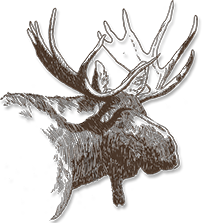
While it’s not perfect, it’s the best I’ve got so far so that makes me happy. And learned a couple of things which will make me better next time. And a point of pride, what you see is what I took and I take that very seriously. I know others look at my photos and say to themselves, “I want one like that.” It’s my hope that with my standards of quality, you can take a little comfort in knowing that if Moose could do it, you can too! And this is just another reason why I don’t crop.
Jan 14, 2013 | Aviation

And then there are times when I simply use what’s around me to make the light happen. Here you can see Stu outside of the plane with the original rib that is damaged and needs replacing, the new rib he made the the pattern he made to make that replacement. At one of his workbenches with his tools putting the final touches on the rib, I made a real simple click of the craftsman at his craft. I only had a minute to make the click.

Working in a hangar has lots of pluses to this process. The background light is really soft, big hangar doors facing to the north bounce in soft light. Behind us is a part of an aircraft, I think it was a nose all polished metal. I wanted Stu and the new parts lit, not the workbench foreground. Holding the D4 with 18AF vertically (gotta love them vertical firing button), the SB-900 on the SC-28 was held up and turned backwards to bounce light off the aircraft. The foreground shadow was created by me, perfect to darken it. I didn’t take time to think about the lighting, just reacted. I can do this one light thing fast and easy. Add a second flash or ask me to draw it all out and plan in advance and then shoot it, I’m screwed! Hope this helps.
Jan 14, 2013 | Aviation

After a recent presentation, I was asked a bunch about my very simple, shooting on the move lighting. A little background, when working with biologists and pilots, I can’t stop them during their work, ask them to backup, set up a shot and go. I have to shoot on the go and get the shot when it happens. I really prefer being transparent and if possible, not even use flash so the subject doesn’t know I’m shooting. There are times when that is simply not possible so the flash comes out. Working with these folks, space is usually part of the equation. There isn’t much which is a plus and minus. The plus is I don’t have to have much light. The minus, me and the gear gotta squeeze into that space. With that said, here’s one example.

I’m photographing Stu, an amazing “metal” guy busy fabricating ribs for this aircraft as he restores it to airworthy. It’s an fascinating craft and art that I love to watch (and ask lots of questions). What was once done in mass production is now done one piece at a time, often with no blueprints. Stu is working rivet by rivet in this section matching up what he hand made with the side of the aircraft just like it came from the factory. He has one high powered work light on the right side that is a source I have to take advantage of. In the background is the roof of the hangar lit by daylight from the open hangar door. The rest of the scene is dark as sin as far as the camera is concerned. Shooting with the D4 set to ISO 800 and with CS e4 in use, shooting with the 18AF (A favorite lens) and SB-900 on the SC-28, I pop up through the hatch (still have a lump from that!). I need to underexpose the ambient light (roof & work light) and light the rest of the tail section & Stu. To do that on the fly, exposure comp in the body is dialed down -2 and the exposure comp on the flash is zero. The flash it turned backwards otherwise it would have lit the tail section like a tunnel, bright closer to the camera and darker back at Stu. With CS e4, the comp dialed into the body only effects the body or ambient light exposure and does not effect the flash. I find this Custom Setting SUPER valuable in my work. I hope this makes some sense and helps you get an idea of how I work on the fly on a project shoot.
Dec 5, 2012 | Aviation

With the huge response to the Epson Finish Strong campaign that we were a part of, one question keeps getting asked. “Which is your favorite?” Great question with the perfect phrasing because “favorite” is exactly how I look at my images. Not the best, but my favorites. I had the amazing great fortune to work with the one and only Larry Perkins, pilot of #57 and my amazing team Kevin Crozier & Scottie Foster and of course, Jake. So it was really pretty easy to do the shoot. It was 90min of flying nirvana as we warmed up then got into position and then made the shot you see in the ad. During that whole time, I brought back and filed over 3000 images so narrowing it down to my favorites is no minor feat. This top image taken with a D800 (loaded with Lexar 128GB 1000x cards!) and 70-200VR2 is one of them because it’s the shot I was going for. Everything you see in the photo from the mountains, sunburst and gesture of the Super Corsair were all in my head before we left the ground. There is a certain satisfaction when what you conceived of months before and sold to a client actually comes to life in the viewfinder. If only critters would do the same thing!

And then there is this shot. When we did this shoot in July ’12, there were two airworthy Super Corsairs, #74 & #57. Both of them restored and flown by the legend Bob Odegaard, the man responsible for so much more in my short aviation career. Two days after the Epson Finish Strong ad first broke in Sept, Bob died in a crash flying #74. This photo here with Larry at the stick, I see in #57 a number of little things Bob pointed out to me in how he restored #57. In the gesture of the Corsair, the light, the background, all remind me of how Bob so loved to fly and work on these pieces of history. Right after the shoot in July as I filled all the images, this one didn’t stick out to me. It was later, after Bob passed that it struck me. There is in this image more than just a plane and a pilot to me. So in answering the question, which is my favorite, I have two. One is from the accomplishment and the other in remembrance of a dear friend.