Jul 26, 2011 | Landscape Photography

This is what it was all about! At the top of the frame you can see the 40 stamps on the Standard Mill. They went up and down smashing the gravel to loosen the gold which would then come down the table. Once on the table, they would pour Mercury on the pulverized material because the gold would stick to the Mercury. All the rest of the material would flush down through the system. Then, the mercury/gold was taken to a room where the Mercury was heated and boiled off leaving the gold. Life expectancy for these works wasn’t very long. This was a very inefficient gold recovery method. It was a hard life.
Photographically, the photo was pretty simple, at least when the thunderstorms are going through. You can take a tour of the Mill so you can get to this location inside. In August when we have the afternoon thunderstorms, they bounce the light in the windows lighting really nicely. If you look at the photo long enough you might wonder where that light in the right foreground is coming from. That’s flash, an old SB-24 bouncing off the wall behind me. I’m in rear curtain sync and using the light to simply even out the light in the room so the end can travel wherever it wants to. This is a photo you can take while on the tour if you plan.
Jul 25, 2011 | Landscape Photography

When I first visited Bodie, the angle had its wings. Today I hear it’s worst then what is pictured here. When my mom visited Bodie in the 40’s, Ella Cain was selling many of the artifacts that were left in the town (since the Cain family owned the whole town back then). Since 1969 it has been protected but that hasn’t stop theft and vandalism which is sad. One time I busted two folks coming out of the Hoover House with a bunch of stuff they thought they should take back with them. While they were written up by the ranger, nothing came of it. My point? This is a place where photographers need to set the standard, be part of the solution and not part of the problem. If the sign says stay out, stay out! Respect what is left so it will be there tomorrow for the next photographer. Take your time, wait for the folks to go buy, enjoy the location and wait for the light. You’ll be surprised what you’ll learn. Like read the grave marker here, this is where a 3yr little girl is buried. Bodie and the times where hard!
Jul 25, 2011 | Landscape Photography

The Hoover House, yeap, that’s my great cousin. My grandfather came up to see him while he ran the Standard Mill 1900 – 1902 which is why my family first start visiting the eastside. Hoover, that name might ring a bell with you. No, not the vacuum guy, the president guy. Yeap, this is Hubert Hoover’s brother. He left Bodie to start the school of mines at Stanford.M/p>
This building is located literally right in front of the Standard Mill. Today it is hard to understand what that means. My mom told me that when she came to Bodie as a little girl, the constant noise of the stamp mill could be deafening at times. Having your home right in front a 40 stamp mill, I can’t imagine how you’d have a conversation. I interviewed Lester Bell back in the 90’s and he told me that as long as the folks heard those stamps, they knew everything was ok because gold was being processed.
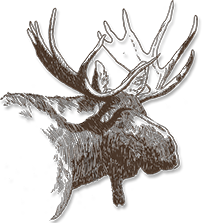
You can walk right up to the Hoover House so making this photo is real simple. With that white picket fence, I waited until the sun had left the house but was still on the hillside (you can see it on the bluff in the left corner). I did that because I didn’t want the white fence, which is the closet item, to be brighter then the house itself. I shot with a polarizer because I wanted the blue sky reflection removed from the side of the building. What does that mean? I wanted that great warm, Sierra tanned brown to come out in the wood and the polarizer removes the blue reflection coming from the sky. Remember, this is a straight scan from the the film. What you see is what I saw and captured. Oh, was there underexposure? This is Moose here, what do you think?
Jul 25, 2011 | Landscape Photography

Bodie State Historic Park is simply an amazing piece of our history! It’s actually part of my family history. There seems to be an incredibly number of photographers coming up to the eastside this summer and rightfully so, heading to Bodie. It is in my backyard and a location I’ve been visiting since 1959. My family goes back in the town to 1900. So to say we have a little history there is putting it mildly. With so many folks coming up, with many asking me for suggestions, I thought I’d blog a little bit about it.
Back in the early 90’s, I was co-leader in a workshop series that taught at Bodie. During that time, I literally had the keys to the town and with the workshop, had access you normally can’t have. I even wrote a book on Bodie (never published) so I have a little insight in the town to share. I went through the thousands of images I have of Bodie, looking at what I should share and how I can help photographically and this is what I came up with. I scanned in 35mm images from the early ninties to illustrate the week. I did that because what you see is what I saw and captured. The images are straight scans, there is no Photoshop applied like I do to “modern” landscapes. You could easily call it all, old fashion photography. The reason? I wanna talk history and light and using them both to preserve part of our heritage. So here we go!
When you enter Bodie, all you’re seeing is about 15% of the original town. The hospital, racetrack and nearly the entire west end of town is now empty meadow. Two fires took out the majority of the town. The photo is looking down on the Cain House from up on Bodie Bluff. You can’t get up to the top of the bluff, that’s closed to the public. Shot with a 800f5.6 with a 1.4x just as the sun shot over the bluff (you look hard, you can see my shadow as I was jumping during the shot). This is really the key to shooting at Bodie, waiting for the light. No matter the time of day, the time of year, there is photography to be had if you just work the light.
Bodie during its day was the technological hub of the world! You wouldn’t guess that today looking at it in its “arrested state of decay,” but a lot of what we enjoy today like transmitted electricity was done first at Bodie. Hopefully I’ve caught your attention and grabbed your imagination and you’ll come back all week as we explore this treasure.
Jul 13, 2011 | Photography


Yeap, the Arctic fox might seem like a project a bit out of your reach. Considering where they live and the difficulty reaching them summer and especially winter, that’s why you’d do you homework. The once species no one ever things about and basically ignores are gulls. But they are a perfect example of the perfect challenge. Gulls have a very distinctive winter and summer plumage. The winter tends to really mess with birders because they are so nondescript. Photograghing though, you can see here with this Laughing Gull example, there is quite the difference. What’s great about gulls besides they are every where and everyone ignores them, when you do make a great photo of them, everyone can relate. That’s cool!
But here’s the deal, you can’t do common of the common! The challenge is not just the biology, but making what many think a “trash” bird look glamorous! How do you accomplish that? Light is a great place to start, dramatic or soft light helps gulls look better. As my good friend Artie says, “What a gull for ten minutes and it will do something stupid.” That stupid act makes for a great photo, always! Lastly, get down on their level. Both of these photos where taken down at their level. There are so many possibilities and that’s the beauty of the challenge. It’s photographic, it’s biological, it’s story telling and my favorite part, it’s just darn fun!
Photos captured by D3x, 600VR on Lexar UDMA digital film
Jul 13, 2011 | Wildlife Photography


There are actually many things in nature that change radically season to season. One prime example are oaks and maples. I have always wanted to do a year long portrait of just one tree. Taking its photo during an entire year just to see all the changes. In 30yrs, I’ve just never gotten off my butt to do it. What I have done though is this same idea with critters. Mammals are a great choice like this Arctic Fox. I love showing these two images at presentations, folks never believe me that they are the same critter. Its summer coat (top photo) is so vastly different from its winter coat (the all white one). And when you look at the muzzle, it is hard to believe they are the same critter.
Here’s the cool thing about this photographic challenge. First, you’ve gotta do your homework and see what animals that interest you have such big changes during the season. Then, you’ve gotta go out and get those photos during those seasons. Finally, and this is the best challenge, you’ve gotta get those photographs out to educate others. When you find such projects in wildlife photography and you take them on, your photography grows in ways you can’t imagine until after it’s accomplished. It’s a great project to start in the summer!
Photo captured by D2XS / D2H 200-400 on Lexar UDMA digital film