May 26, 2016 | Wildlife Photography
On my last two week bird road trip, I photographed 42 species of birds, 23 were new to my files. It was a great trip! Now I saw some gorgeous birds, some rare birds, some weird birds and lots of birds but the one that was the real joy to photograph was this Bobolink. Why? I’ve been seeing Bobolinks on wires for two decades. I have many times stalked a Bobolink, had them in the viewfinder but for every possible reason, I had never got one click of one. Not a rare bird, not an incredibly cool looking bird but for me, one of those birds I’ve always wanted only because of the challenge of getting the shot. And this trip I got one in the viewfinder, I lucked out with a clean background and nice light (not great light though) and made the click. What’s the point? No matter where you are in your wildlife photography, having a critter in your sites, preferably a “common” one that you want that nice photo of drives you to get out and get that photograph. You might not get the shot of the bird you’re after, but you will photograph birds and therefore hone your skills. It’s a fun thing to do, a great challenge, a simple pleasure especially when you score!
Update – the chase is still on! This is a Lark Bunting and not a Bobolink. Hot dogs!
May 11, 2016 | Wildlife Photography

I’m up at Magee Marsh, OH and even with 55 degree temps and the sky spitting at me, the sound of spring is everywhere! Jake had come up here a couple of years back and said, “Dad, you gotta go” and so I’m here. He was so right! Had a marvelous day in this new Shang-ra-la seeing some gorgeous birds sing the blessings of spring. What a day!

What species did I see? Lost track to be honest with you. Spent a heck of a lot of time with Yellow Warblers (top photo) cause even though common in my backyard, these are wearing their spring best and singing up a storm and point blank range. I had really good birds as well like this Prothonotary Warbler which stuck around for quite a while. With these small subjects and travel being restricted to a boardwalk, I went out with the big gun, D5 / 800mm. With the over saturated light, shot with no flash, at zero exposure comp. Only out the ordinary thing I did was raise the ISO to 400. What a great experience … loved it!
Apr 18, 2016 | Wildlife Photography

This morning was twenty years in the making and it DID NOT disappoint! The Sharp-tailed Grouse was a species I sooooo wanted to photograph on their lek. I have tried over the years many times to get on a Sharp-tailed Grouse but with no success but finally two weeks ago, it came true. Why were they so important to me? This vanishing member of our great central grasslands was the inspiration for many cultures and its performance one I’d seen in photographs since I was a kid. Seeing it in person let alone photographing it has always been on my top five list of wild heritage experiences. To look through the window and see them thirty feet away at the Calamus Outfitter blind was for me, a dream come true!

Smaller than the Prairie Chicken, even though they share the same habitat, they are very different. You can see how they look differently. They utilize the same habitat but evolution has changed the way they attract a mate. Where the Prairie Chicken jumps and does battle, the Sharp-tailed Grouse drums their feet madly on the ground and then goes running towards each other only to stare at each other until doing a little hop and going back to drumming. The lower photo is a “hybrid”, a grouse & chicken grouse combo (on the right) who is so confused. He still jumps like a chicken in the air causing true grouse to cock their head in bewilderment. The biggest part of the story you can’t get from these stills is the sound. The drumming of all the grouse on the lek is heard long before you can see the grouse. And when they start up, it’s deafening and when the stop, all in concert, the silence is deafening! I shot from the bus blind with the D5 / 800mm which made it possible to watch just the grouse and not the photography. The experience was long in coming and well worth the wait. I can’t wait until next year to spend more time with this very special and unique member of our wild heritage.
Apr 11, 2016 | Wildlife Photography

From inside their covered wagons, western bound immigrants heard the haunting sounds coming from the landscape before the sun rose and thought the world around them was haunted. It was spring and the Prairie Chickens in the thousands would be on their lek doing what chickens do. When the sun shined light on their “ghosts,” the pioneers realized breakfast had been provided them. The Prairie Chickens has been in trouble ever since. There are few refuges left for the chickens and we were so fortunate to spend time at one of them this past week. The amazing folks at Calamus Outfitters are conserving their habitat on their ranch and have created for us photographers an incredible opportunity to see, witness and photograph this very unique piece of our wildlife heritage.

These are Greater Prairie Chickens and the calm you see in the top photo, it’s hard to imagine all that goes on for this male to find a mate and their less than 30sec moment with that female. They bob their heads, stump their feet, boom, flare their “horns” or pinnaes, and so much more all in an attempt to get the female’s attention. And when that and a whole lot more doesn’t work, they spar. What still amazes me after decades of watching this sparing is how, with the naked eye, they simply appear to be jumping up and down. But when you photograph them (shooting D5 @12FPS, 800mm) and look at their leap frame by frame, you see just how cut throat these chickens are to each other. They are simply nasty!
Photographically, while freezing the sparing is very cool, showing the motion in a still image to me is even cooler. So then comes the dance of a fastest enough shutter speed to freeze the eye but slow enough to blur the wings. It’s a really low, low, low percentage shot. As in, shooting 30-40 images to get one that works like the one above. Shot at ISO 400, 1/200, it has just the right combo of sharpness and blur along with the story. I mean, look at the chicken, it looks like it’s going to land on the back of the other and stomp on it! The intensity in the stare and blur of the wings, it brings out the fierce competition in an otherwise, simple chicken. It’s just one of many reasons I love Prairie Chickens.
Mar 11, 2016 | Wildlife Photography


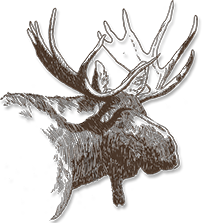
A great question that constantly winds up in my inbox is, “Where do you crop critters?” Unfortunately this great question has NO good answer. There is no guide, no book, no rule so in helping folks, I try my best with simply saying, “Try to avoid the uncomfortable crop.” That answer barely describes itself so with the latest askers request, I’ve posted four images here which demonstrate what I consider as uncomfortable crops. As you can see, I have these images which in itself means I saw some redeeming value if only to demonstrate, uncomfortable crop. Cropping or cutting into a critter so body parts are missing is the issue. How much can you not include and still cause it to seem, uncomfortable? The first thing I try to avoid is a crop which makes it appear I took a head down from a wall, hung it outside and took its photo. The Pronghorn and Bison are good examples of this. Too far back or too far front is another thing I try to avoid (the Moose). And random pieces of leg are definitely not a good thing (Douglas Tree Squirrel). I wish I had some rule or guide to pass along as an answer, but this is about the best I can do.
Mar 2, 2016 | Wildlife Photography

The Roseatte Spoonbill is such a gorgeous bird, especially in the spring. It’s then their pink becomes almost neon as they dawn their best for attracting the opposite sex. The beauty of them is the subtle shades of pink that sculpt their form. Then there is their bill that gives them their name. A resident of our southern Gulf states the majority of the time, they take on the allure of being a tropical bird making them even more mysterious as beautiful. In the search for photographing these magnificent creatures going beyond the basic portrait seems like it might be a challenge. But the only challenge is finding them early in the morning, the rest is pretty simple.

It’s when the sun first kisses them that they tend to get cleaned up for the day. Better known as prenning, they are putting all their feathers in order while water proofing them once again. Of course, we could say the males are grooming themselves to look good for the ladies and we might not be too far wrong. The challenge then is to find those locales where they spend the night where the sun first kisses them. There are actually lots of locales where that happens, I’m fortunate to know a few. Then once there, the next challenge is having a long enough lens to control the background because you are often shooting up on them on perches. The light coming through the canopy in the background, that bright highlight, can ruin the whole early morning feel. In this case, I was shooting 800mm / D4s and moved constantly to keep up with the birds and the background (underexposing -2/3. Lastly, I wanted more then just a portrait. Early in the morning when they are “grooming,” those wings spread and the bill moves about. That little bit of biology brings interest and a storytelling brings life to the Spoonbill. With that color, that’s all it takes to make someone stop and look at your photo.