Jan 11, 2016 | Wildlife Photography

Shooting in winter has some abnormal challenges, one is really boring but turns out to be important. Condensation can really cause us issues if not nipped in the bud from the start. Condensation normally occurs when warm, moist air hits a cold surface. It can start as simply as our breathing on our gear and ice forming while shooting. The gear with that ice goes in your camera bag and once in your warm room, the condensation issue is born. To avoid this, I do these simple but I think important steps. When I put my gear away for the last time after shooting, the memory cards are removed and put into my pockets. Once I get into my room, I grab a clean bath towel and on the bed, I will lay out all my gear and quickly cover all of it with the towel. I then open all the section of my photopack, unzip them but have the flaps closed. I then put the cards in the computer to upload and then go eat. When I come back to the room and hour or more later, the gear normally has warmed up to room temp (never having the room above 70 degrees). Any condensation will have formed on the towel. I then clean the gear and put it back in the bag and put it all in the coldest corner of the room. Boring stuff, but simple and it’s never lets me down keeping my gear dry and operating even down to -32.
Jan 7, 2016 | Wildlife Photography

It’s been a few years since I’ve been able to enjoy winter shooting from the office. It’s actually real simple; put out some food, set up the gear, have it snow and shoot. It’s all real simple but the white stuff when you’re in a long drought, but such has not been the case this last month. Who you see above is a female White-headed Woodpecker (and how she came to be here is a whole other story). I’m shooting with the D4s / 800AFS with light provided by the ProPhoto B2 with the 2′ Octa w/grid. Why am I using flash and why the B2?
[envira-gallery id=”40956″]
The key here is, I don’t want you to see flash! The final photo has to look like what you think the light should look like. I shot this before and after of the perch so you can understand how and why I’m adding and melding the light. When it’s snowin, it’s dark and wanting to blur the falling snow, I need a long shutter speed. Birds are always moving so the first role of the flash is to stop the motion, get a sharp photo. Then, I want to remove the very blue quality of the light which flash brings back to an even 5500k. Lastly, the ProPhoto B2 w/Octa & Grid creates a very large light source for the size of the subject while having it “wrap” around the truck keeping it’s shape, form and texture. This of course is also given the birds so they look like a living critter and not a cardboard cut out. Now Sharon doesn’t really love when I do this as the open door is right next to her desk and snow piles up on her keyboard. So she takes advantage of my shooting to go out to the warm fire and leaves me to the cold and the fun ‘n the snow!
Jan 4, 2016 | Wildlife Photography
[envira-gallery id=”40897″]
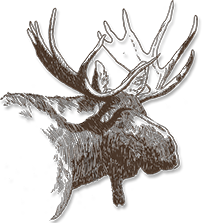
The background in a photograph is so important! It can do so many things positive, and negative, and seeing and working the backgorund is important because of this. It sets the stage for our subject, gives it a place to stand out and tell its story. The relationship between the subject and the background is directly linked so we as storytellers must see and use this in our storytelling. In this case, a yearling Moose was simply browsing along in the fall willows. I was shooting with a D4s / 200-400VR2 / TC-14eIII, shooting wide open at f/5.6, using the lens and teleconverter combo to narrow my DoF to control the background. In one photo, the willows are just behind the calf and even at f/5.6, they are busy and distracting. In the other shot, the willows are now a substantial distance behind the calf and are softer, not so busy so the calf pops out more. But the man made structure even further away in the background while out of focus, isn’t even disappearing. It’s still not far enough away. In the dance of aperture and DoF, while focal length, f/stop and distance to subject are important variables, don’t forget the background. It’s distance from the subject makes all the difference.
Dec 29, 2015 | Wildlife Photography

I was a tad to slow! The White-headed Woodpecker had been frozen on the perch for nearly twenty minutes. All the feeders were empty and the Mountain Chickadees could be heard but not seen. There’s a predator on the prowl and all the critters were telling me that. Two days before, I’d seen a small flash chase a bird into tree three, but I didn’t see who it was. It was small and rusty colored so thought our No. Pygmy Owl was back. So with all the critters communicating a predator was around, I was looking for the owl. Smaller than a dollar bill, they can be very hard to find in the trees. So yesterday with all the signs, I was just turning away from looking at tree three for the owl when it dashed in and landed. It wasn’t a owl though but rather a small, male Sharpie! It was looking around so I grabbed my D4s / 300PF (left out just for this reason) and walked over to the door. But by the time I got there, the Sharpie had flown down the alley on the prowl. Missed it by a hair. The birds were still frozen so I knew it was around so I kept doing a 360 around the house looking for it but alas, never could. This is why I have my gear always at the ready, it’s how I got the shot of this big Sharpie female earlier this year. You gotta keep at it cause even those times you get the photo, it’s often by a hair!
I was just about to click Publish on this post when I saw the Sharpie shoot down the alley … the chase is on … again!
Dec 14, 2015 | Wildlife Photography

For a long time I’ve wanted my own, cool shot of a White-breasted Nuthatch and no matter how I’ve tried, no luck. I keep coming up short. This is in part because they just don’t hold still! You can’t bribe them to come to the same spot over and over again. You gotta watch them land at the top of a tree, work their way down the trunk to the food source, never taking the same path twice, and hope you get in a click. Only if there is an avian predator might they hold still for a moment. So, I’ve been on my deck since the first snow fall again trying to get the shot. I’m standing out there with my 300PF and using the snow as a reflector. And this this weekend, I finally got one photo good enough to post. It’s a start, but I’ll be back out there working on better.
Dec 11, 2015 | Wildlife Photography

Been personally witnessing this for three decades, it’s not new. I don’t believe the warming of our planet is man caused but damn sure believe we’ve greatly intensified and sped it up bigtime, faster than Mother Nature can ever evolve for sure! Living “up high” and working on the edge a lot, we’ve seen with our own eyes so much of the change. There is a simple yet eloquent piece out in High Country News you might want to read. No matter the ills that befall us, the more we know, the more we can effect a positive change. Give it a gander and remember, you can change the world with your photographs!

Quino Checkerspot photographed March, ’97