Jan 19, 2015 | Wildlife Photography

The Bald Eagles of Haines, AK is a very magical part of our wild heritage. I felt very fortunate to finally be able to venture there in the fall of 2014. Shot the Bald Eagles mainly with the D4s / 800mm which includes the video that follows. Hope it leaves you with a sense of the wonder.
Jan 15, 2015 | Wildlife Photography

I’m quite excited to be on the editorial staff of Wild Planet Magazine! My first column just went live and along with some other marvelous content, it’s a gorgeous issue. I’ve enjoyed Wild Planet since its launch and I think you will too. Check it out, you’ll get hooked!!!
Jan 8, 2015 | Wildlife Photography

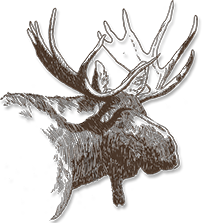
No secret, I love my northern cousins, the Moose! NOT even spent enough time with them cause these giant deer lead a most interesting life. There has been a study that’s in its 57th year on the relationship of Moose & Wolves on Isle Royale that is fascinating. I’ve always wanted to get involved with it, never have. This is in part because it’s moose, and its in part because the lead biologists is Rolf Peterson (no relationship). He’s legend in the field and if you click on the link, you’ll get a sample of his work which was published yesterday. With 57yrs of data, they can speak with authority about what they are seeing and why. I think it’s worth your time, might inspire you to get involved in a project, any project for the long term to make a difference!

Jan 7, 2015 | Wildlife Photography

There is no more iconic African critter than the African Lion. When I went to Africa, seeing one wasn’t a priority to me. Ya, I wanted to see a male with a big, full mane, but that was about it. That’s until we came across our first pride and saw that female perched on a termite mound. It was like right out the movies! We then came around the mound to find the pride there all asleep doing that thing that lions do so well. And the more time we spent with them, it was obvious there is more to the African Lion than has been depicted. Part of that untold story is that they are in trouble, serious trouble. Yesterday, the USFWS moved to list them as threatened on the endangered species list. Sighting they have less than 22% of their historic habitat, they listed a number of reasons why they are in trouble. The one reason left of the list that we learned about first hand is poaching! Ya, lions are poached like other African species for the same stupid uses. Just has to make one wonder that if a creature this big, the magnificent, this world renown is in trouble, what about the little guys you never, ever hear about? Get out there and click and tell their story because with your camera, you can change the world!
Jan 5, 2015 | Wildlife Photography

Birds in flight are a tricky subject. Most are just really, really happy to get them dang things sharp. The idea of then placing in the frame a single bird at the right spot, with the right light and the right gesture and I’ve seen it make some photographers comatose! Admittedly, that’s a lot to deal with in a viewfinder because if nothing else, it’s all moving. The key is to eliminate all the variables in the photographic process so all you are doing it concentrating on the formation.
You start with making sure your long lens and panning technique are solid, second nature. A big part of this if shooting with a big rig (these were shot D4s / 800mm) and on a head like the Wimberley giving you background control. Be sure that the controls on the head aren’t tight nor loose. The best I can describe it is you should have to push against the head and feel some resistance but not so much that the head “chatters.” You must work between your tripod legs and not with one leg between yours (which means you could be constantly moving the tripod and repositioning it). And that you look for your “kill zone” which is where you have the best light and background.
[envira-gallery id=”37397″]
For flight photography, there is a basic rule for easy flight photography which really helps in this process. You want the sun and the wind on your back and the bird flying into your face. When you have this combination you have the best lighting and the slowest flying birds. Then you want to find the best background with this scenario (this isn’t a must, it just makes the best photography possible, easier). These photos of Greater Sandhill Cranes were taken at Bosque del Apache at the Farmfield, a great place in the afternoon when you have a wind blowing to the north (so wind is out of the south). On this afternoon, we had the perfect conditions other than it was too windy. The sun and wind was at our back and we had a good background. Then you have to start watching the birds and the way in which they tackle flying into the wind.
It’s smart to start with just getting the single bird in the viewfinder to get use to their rhythm and pattern of flying. Get a feel for their path, speed and wing beat which doesn’t take to long. Personally, I’ll look at a group of birds and make the decision which individual is going to cut out and make a good single shot and committing to it. Sometimes you get the shot, some times you don’t. Once I feel more confident at that prediction, I go for the groups. The one thing you might notice is that for the groups, the lighting is sidelight and not frontlight. That’s because I want that shadow to separate the individuals as well as to trick the eye to seeing more sharpness in the photo than there really is. Inevitably someone will ask how many shots did I take to get these. My shooting percentage was 82% for this afternoon, I deleted 18% of what I shot. You can do it too, just takes putting that time in and then acting on it. The resulting images are worth all the time you put in!
Dec 30, 2014 | Wildlife Photography

Which way to turn the camera, vertical or horizontal (yes, I know, these days folks say landscape and portrait but to this old fart, those are terms for rock and people photography)? I’ve written about this many times before but it’s a question that keeps coming up, from emails and my own photography. Here’s the latest example where in my own mind which way to turn was not obvious. What do I mean by obvious? Well, the common thought is to put a vertical subject in a vertical format and a horizontal subject in a horizontal format. But since we want to make the uncommon out of the common, the question comes up. You add in elements like in these photos of the fine, autumn colored grasses and the question remains, which way to turn our camera?

Shooting the Snow Geese at Bosque del Apache last week, especially in the early morning, the light plays on their white plumage like a song as the sun rises. The light, if for only briefly, hits the top of the head and falls off down the body towards the feet. This play of light also works on the landscape around the geese along with the geese themselves. All of this is what raises the question, vertical or horizontal? Now looking through the D4s / 800mm, a very important detail came to life in this visual process, the white at the feet of the goose. Now that white appears to be a spot of light but when in actually, it’s whitewash (eeeeew). Nonetheless the source, that bit of white at its feet is what made me wonder should I go vertical or horizontal. As you can see, I shot both. The question is, did I take both photos because I wanted examples to post or, did I not have the answer myself and shot both. You may never know.