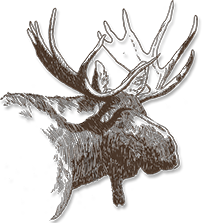

It is obvious, I really enjoy spending time with Moose, especially those in Alaska. Being the biggest of our four subspecies, watching them going about daily life is fascinating. Many forget they are just an over grown deer but those long legs and nose are highly specialized for the world they live in. All you have to do is walk literally in their hooves and you quickly appreciate just how well adapted those long legs are to the Alaska world they call home. This bull, he really intrigued me because he has an infliction which is not really that uncommon and that makes photographing this common Moose, uncommon.

If you look closely at his antlers, you’ll see they look like weathered wood and in some spots, he still has his velvet. CWD affects very few and is only the second time I’ve seen it all these years which is why I focused in on this bull for five hours. I shot with the D4s / 200-400VR2 with the TC-14eIII at times depending on where he was and what he was doing. Where I stood in relation to the bull all depended on the light since the story is the disease. My goal was to show off that CWD by using the light to bring to life the “deformity.” Now this particular bull we only saw this one afternoon, never saw again during the week. That’s in part because he is not part of the breeding pool. Those antlers couldn’t withstand the impacts of the rut. Will he be around next year? The last bull I saw like this I was with a noted Moose biologist who said it’s 50/50. And that is the way of life for the Moose. Keep in mind the most fit bull, the one who breeds with the most females might not be either. They have a hard life and I was honored to have spent this time with this icon of the Alaskan wilderness!
