Nov 27, 2015 | Wildlife Photography

With winter in the Sierras comes cold temps and with a long lens, you can stay inside and warm while shooting the great outdoors. That’s what I did yesterday in my never ending quest to find the uncommmon in the common. Yesterday, Sharon called out that the “love doves” as we call our pair of Morning Doves were in tree 4. So I stopped making scratch waffles and headed to the D4s / 800mm to shoot out the window. Because of the cold temps, 7 degrees, the doves were perched trying to stay warm. The pattern in the wing of the one above really caught my attention, its near circular shape is pretty uncommon cause from it being puffed up. Not everyone loves the cold like I do, that I know. But when you can make these simple kinda clicks, I’m shooting in 7 degrees and loving it!
Nov 25, 2015 | B&W Photography, WRP Ed Zone

John Paul spelled out the digital darkroom B&W options brilliantly here, wish I’d thought of doing it! Many including myself look for the best way to convert our images to B&W and as JP points out, there is no one way since B&W is such a romantic medium. We need to mix in the digital darkroom as per the heart! With that said, he’s compiled a comprehensive list and IMHO is spot on. And like JP, my preferred method for B&W conversion for some time now has been as he states:

The only thing I add to this is at times is Nik’s Pro Contrast at the start of the process and then at the end of the process Levels. The key to the methodology described above is its Quality and Flexibility and Speed. And this is important when a clean Black and a clean White is essential along with the mixing of the heart in the final B&W image
[envira-gallery id=”40591″]
What you see above are some of the possibilities by just cycling through the drop down menu in the B&W Adjustment Layer. In order you see above I have applied: Original, Blue, My Finished B&W version, Green, Infrared, Max Black, Neutral Density, Red and Yellow. Below is a screen grab of the Layers for the B&W version below, the one I like the best for this image (rarely is any two images have the same mix). How do YOU learn what works best for YOUR B&W? Go through the list JP was so wise to generate, using all those methods on at least three different images. Save ALL those files and then print them all out. That is what I did, I have a good feeling that’s what JP did and it’s what you should do. Oh, what about those B&W plugins? You might have noticed they aren’t advancing but digital is. To me, that’s a huge hint to master what we’ve got and what we know is advancing, Photoshop! Have fun and enjoy the very romantic realm of B&W!


Nov 24, 2015 | Wildlife Photography

The San Joaquin Kit Fox, one of the first critters to be listed as endangered in the US has new troubles. Mange, a disease many pet owners are aware of started to appear in the SJKF back in 2013. About 110 have now been found but there is surely more as many succumb to this disease and die a miserable death alone in their den. I’m bringing this to your attention because you can help! Read his piece and if you see what you think might be a SJKF in trouble, make the call. And you can learn a lot more about this and our environment here. It might just save its life! Thanks.
Nov 6, 2015 | Wildlife Photography

We were blessed with snow earlier this week (and more coming this weekend), 7″ at the office and with the cold temps, it has actually stuck. That’s great for lots of reasons, the biggest is bird photography. Snow brings many opportunities starting with making our bird baths the place to be! With free water frozen, our heated bird baths get hit harder than our feeders. But our feeders are busy as well as the switch in characters continues with the change of the season. The best thing about snow as far as I’m concerned though is, it’s a natural reflector. The flashes are for the most part retired because the snow reflects light so nicely, the light is naturally filled in. It’s a beautiful thing!

The Red-shafted Flicker (above) is a “kid” that is not even a year old yet. Its parents who have been coming to our feeders since they were kids brought him and he’s not left. So unlike even his parents, he is not shy and sticks no matter what we do. And the Common Raven, that’s Sharon’s pet we call Edgar. He’s a character! Sharon’s been feeding him dead squirrels, mice and other delicious things. He follows her around the property waiting for the next hand out. Both of this photos are being kissed with reflected light from snow which creates the unique lighting. I’m shooting with the D4s / 800mm rather than the 300PF to eliminate the snow that is bouncing the light, needing that narrow angle of view so you just see only the subjects. Since snow is not flat but curved, the light it bounces is to some extent directional and that’s why it’s unique. Edgar, the light brings out some of the iridescence in his feathers which I really love. The best part is, the light is never the same as snow comes and goes providing continual new opportunities. mtc
Nov 5, 2015 | Wildlife Photography

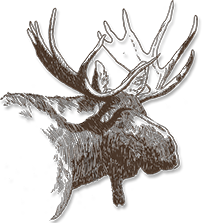
Size isn’t everything! Size of your lens for example, this photo was taken with 1000mm. Size of your effort to get the photo, we just had to walk a mile for this photo. Size of your subject, that bull Moose couldn’t be any smaller in the frame. The size of your heart that drives the size of your imagination, now we’re in a conversation where size matters. When you put your eye to the viewfinder, be sure you’re concern on size is the right size. Then and only then will the subject reach out and touch the viewer and the story resonate.
Nov 4, 2015 | Landscape Photography

While fall color is on its way out, I pose this question to give you a year to think of YOUR right answer. I do love saying, “less is more” and in this instance, it might give way to a better photograph. I shot all three images with a Df / 24-70AFS and used my favorite tool, my feet to change the photograph. But before you move your feet or change your lenses, you gotta answer the question, “can you see the trees from the woods?”

What are the factors that might help you answer this question? For me, it’s the light, that’s the biggest factor. With fall color, you have the “color” that sucks the viewer into your photograph. Be it yellow, red or a combination thereof, those colors help the mind’s eye see into the frame and travel about. Next then are all the vertical lines, the trunks. Light does help here but what if there is no magical beam of light, how does the eye move through the frame to experience the same feelings you had being amongst the trees? This is where less is more comes into play.

You see here three photos, the same grove that I simply moved physically closer to as I zeroed in on the one grouping that I liked from the start. Any one of the photos might or might not be your seeing the trees from the woods. The bottom image is mine. There’s an old saying, your tripod has legs, so do you. In seeing the trees from the woods, not planting but moving might be the best way to finding the photo that expresses best for you what you’re feeling in that beauty. Just yourself if less is more and go looking.