Nov 9, 2018 | Landscape Photography
The heavenly bodies shimmered in the cold crisp skies over Arches Nat’l Park. So every night we’ve been out enjoying them and preserving the memories with our cameras. We kept it real simple so we could stay warm, have fun and be successful. The above photo was taken literally from the side of the road. We positioned ourselves so the oncoming car headlights did all the light painting, we just had to open the shutter and enjoy.
The photo of Delicate Arch required a little more, had to make the forty-five minute walk up to it. Otherwise, I set up the D850 / 8-15Fish with ISO 3200, A WB, f5.6, 30secs and shot. The glow on the horizon is … the setting sun, light polution … I’ll let your imagination fill in the blank. We’ve had four great nights under the stars coming back with great memories, in our hearts and camera!
Nov 7, 2018 | Landscape Photography
Mesa Arch is a gorgeous locale and when empty of folks, really good for the soul! Been coming to the “Arch” for one heck of a long time. Those who have never been to the “Arch”, the bottom photo gives a general idea of what the “Arch” looks like. It’s not really arch like in shape so long ago, I started shooting it with a fisheye lens. So this trip, I shot nearly entirely with the 8-15Fish(such a gorgeous Fish!). The big variance with the “Arch” over the year is the placement of the sun on the horizon, this time of year it’s nearly dead center. I personally like shooting the “Arch” long after the sun is up (and most of the folks have left) and then “pinch” the sun to get the flare. The top photo is my favorite shot from this year shooting at 14mm literally right at the edge of the rim. But it’s not my favorite “Arch” photo. That I took this morning but from a different point of view.
Shooting with the Z7 / 8-15Fish and still at 14mm, I waited until the sun was even higher in the sky. At this time, there was nobody at the “Arch” so you can stand where ever you want with no one else in the frame. With the “Arch” blocking the sun and with the very cooperative clouds, I made a simple click as what you see is exactly what came out of the Z7. For me, this simple, tranquil shot of Mesa Arch tells its story and my experience the best and my all time favorite. Still with a Fish creating my “Fishy” arch, but with the peace that such a location that is part of our wild heritage coming through.
Nov 6, 2018 | Landscape Photography
There we were on a leisurely drive to Turret Arch for sunrise when we came around the corner to … surprise! I had in my mind rocks and red, not the slightest hint of a moon in the slightest amount of light in the sky. We’re still scrubbing off the rubber I left on the road for hours! It was simply gorgeous! The photography was easier than the stopping actually.
I hopped out and grabbed the Z7 / 180-400VR, threw it on a tripod, dialed in -2 and shot. Then I ran up the road (fast walk) and “set” the moon again and then ran up the road further to “set” the moon one last time (bottom photo) before it disappeared for the day in the rising sunlight. What a spectacular day to start at day, by the light of the silvery moon!
Oct 30, 2018 | Wildlife Photography
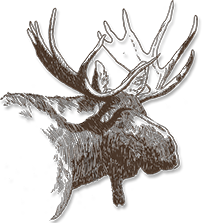
It’s such a little thing (those them ears are huge!), the direction of the ears on ungulates. Moose, deer, elk and all hooved animals use their ears to tell them lots of things, the main being which way is trouble coming from. They are constantly pivoting them to take inventory of everything around them. Bull Moose use them along with this to listen for the moans of cows. Those big racks are like a disk and they turn their ears to listen to all the sounds that come in. It really is a remarkable adaptation they use with great accuracy. Since the Moose don’t smile or frown or have any real facial movement, it’s their ears that do all the talking. So what do you want your ungulate to say?
Here are two quick clicks to illustrate my point. Shooting with the D5 / 180-400VR a split second apart, you can see how with the ears forward (the desired position of ears) the Moose is engaging the viewer. With the ears back, the Moose looks pensive, afraid or even aggressive. Now there are other body gestures that make the ears back better or worse. But it all starts with the ears so watch them as you deal with buck fever. Always ask yourself, “what do the ears day?”
Oct 25, 2018 | Wildlife Photography
Oh ya, nothin good is coming with that look in a Moose’s eye! Bull Moose has quite a ritual they go through each late fall in the pursuit of mating. Battling and chasing other bulls, young and old is a big part of it. It takes a lot out of them so typically after their afternoon nap, the fun begins. In this case, these two who were really just “goofin” give you a great look at the battling process. You can see in the eye of the one on the left the invitation to shove. The cocked head and eye tell the opponent that it’s on! I was shooting with the brilliant D5 / 180-400VR which provides the speed and flexibility to capture the action. So, after hours of boredom looking at sleeping bulls, you have a thirty-minute burst of sheer spectacular wildlife biology action. What a great day just knowing a whoopin is comin!
Oct 22, 2018 | Wildlife Photography
I got up Saturday, grabbed the Z7, FTZ with the 60f2.8micro and headed outside with Sadie to photograph the leaves frozen in the bird bathes and well, nothing. I moved leaves around the meadow, chased the light and Sadie, nothing. No worry, I’ll head to some of the trees and went for backlighting, nothing! That afternoon, the next morning, that next evening, nothing. It simply wasn’t speaking to me, I just wasn’t feeling it, the photo. The closest I came was this shot of Mt Tom Sunday evening and while there is fall color in the foreground, you wouldn’t know it as I went B&W. But that’s OK, the challenge really was just to get out, anything that came from that was icing on the cake. So my weekend challenge, well so much for color.