Oct 19, 2015 | Landscape Photography

Reflections, there is this thing with reflections and photographers that they just have to incorporate them even if the photo still sucks. Yes, I said sucks. Reflections are beautiful but that knowledge doesn’t make a photograph with reflections automatically beautifully. I’m not suggesting what you see here as beautiful or as suckie, but rather just photographs to talk about a couple of points. For the record, I like this reflection, both versions.
Reflections obvious reflect some object. In this discussion we have reality and perceptions, reality is the object and perceptions are the reflections. The most common question I ask when I see reflection photos is, “which has the better exposure, the reality or the perception?” Typically its the perception because water, what creates the reflection, automatically sucks up one stop of light. That generally gives the perception the better exposure. The better exposure brings out better colors and blacks. So, in this scenario as I was being lazy, I used a split grad in post to make the exposure for reality match that of the perception.

Now in perfecting the lines, we were out on a floating dock. The required shooting handheld and not on a tripod. In this case, I was shooting with the Df / 24-70AFS and NOT a polarizer. Why not a polarizer? Many ask if they are needed when shooting reflections. They are only if you want to REMOVE the reflection which is their purpose. Since the lines of the trunks in the water is what drew my attention to the reflection, the use of a polarizer would have minimized if not removed most of them. With that being the case, a polarizer in this case wasn’t the right tool. While the straight lines were so cool, with a little wiggle of the dock we were on, we could had a zag to those lines and I kinda liked that as well. So when working reflections, make sure you’re photo is really a photo and not just a neat personal experience and then use to the tools so the perception is better than reality.
Oct 15, 2015 | Landscape Photography

When in the Rockies a week back, at Cripple Creek, we decided to take a road trip to St Elmo, CO. It’s a “ghost town” that’s nearly 10,000 feet in altitude. We’d never been there but long on the bucket list of locales to explore with our camera. The key was to be there in fall when the valley it’s nestled in comes to life with color. After the two hour ride, we arrived and I can honestly say, it did not disappoint!

As you can see from the photos, we hit the fall color at the exact right time. That was huge as it really made every turn a great photo opp. St Elmo has a very free and western lifestyle which translates to everyone is friendly until you cross the line. We had a grand time walking the streets with all the other tourists who venture up into the hills to see the sites. The General Store which is the heart of the tourism closed the next day so we made the most of it all with camera in hand. What a grand day!

I cruised the town with the Df / 24-70AFS with a Polarizer attached. Why that combo? Look at the skies … their are bald, bald, bald!

What does the skies have to do with using a Polarizer? Well, you can watch this class on shooting fall color which will help but on the short, the polarizer removed reflections, the reflections of the blue skies! I’m not using the Polarizer for “blue” skies but to remove that blue reflection from the leaves so their color blazes through (you want blue skies, use the Luminance Panel in ACR). With that blaze of color, it set the scene for the rest of St Elmo which made the photography a slam dunk. Oh, one other detail that I think is kinda big. I shot in Cloudy White Balance the whole time. Why? The Kelvin temp was around 9800. How do I know that number? I set the WB manually to 10k and that image looked like what I was seeing. So with Auto WB stopping at 8k, to get the correct color I set the camera to Cloudy. This clear as mud to you? Do some testing and teach yourself. You’ll find you’re a great teacher!
Oct 14, 2015 | Wildlife Photography

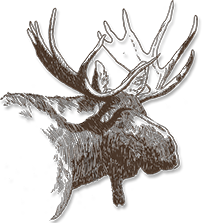
It is obvious, I really enjoy spending time with Moose, especially those in Alaska. Being the biggest of our four subspecies, watching them going about daily life is fascinating. Many forget they are just an over grown deer but those long legs and nose are highly specialized for the world they live in. All you have to do is walk literally in their hooves and you quickly appreciate just how well adapted those long legs are to the Alaska world they call home. This bull, he really intrigued me because he has an infliction which is not really that uncommon and that makes photographing this common Moose, uncommon.

If you look closely at his antlers, you’ll see they look like weathered wood and in some spots, he still has his velvet. CWD affects very few and is only the second time I’ve seen it all these years which is why I focused in on this bull for five hours. I shot with the D4s / 200-400VR2 with the TC-14eIII at times depending on where he was and what he was doing. Where I stood in relation to the bull all depended on the light since the story is the disease. My goal was to show off that CWD by using the light to bring to life the “deformity.” Now this particular bull we only saw this one afternoon, never saw again during the week. That’s in part because he is not part of the breeding pool. Those antlers couldn’t withstand the impacts of the rut. Will he be around next year? The last bull I saw like this I was with a noted Moose biologist who said it’s 50/50. And that is the way of life for the Moose. Keep in mind the most fit bull, the one who breeds with the most females might not be either. They have a hard life and I was honored to have spent this time with this icon of the Alaskan wilderness!

Oct 12, 2015 | B&W Photography, Landscape Photography


Our first day in Alaska found what most consider as normal Alaska weather, rain. It wasn’t that bad but it was heavy enough to preclude hiking up in the mountains to look for Moose. While not perfect for Moose, it was for landscape photography, especially B&W photography. The wet rock and earth made it real simple to find those clean blacks I want in my B&W photos. I then turned to the skies to find the rest of the tones I what to make up a B&W photo. One thing I want to bring your attention to is that I use Dehaze in all of these images to bring out the character in the clouds. How did Dehaze work in these conditions? I worked really well but the technical side I’ll share this week in a video where you can easily see it in action. Hopefully these photos bring to life the big world that is Alaska because it really is magical, Alaska Black & White!
Oct 5, 2015 | Wildlife Photography

Saturday was a great day on the property. The morning had the Lewis’s Woodpecker and then in the afternoon, these guys wondered in. Now we have had deer on our property in the past, but normally we only know about it when our beagle’s nose tells us. We rarely see them. So to have a 6 & 4pt buck and doe come in and make themselves at home, that floored us. For the first 30-45min we just watched them as they went through and munched on the greenest plants they could find. Why were they there in the first place? There is a semi annual migration of the Mule deer through the area. Normally it’s on the other side of the valley but with the drought, I think they game through the area with all the green plants from folks watering (had a doe and fawn come through on Sunday). After that time, I decided I’d go outside and see if there were any photo opps to be had.
[envira-gallery id=”40116″]
I grabbed my favorite backyard set up, D4s / 300PF and headed out. I didn’t “sneak up” on them but didn’t rush out either. I stayed in the shadow of the house and slowly, smoothly, sundered up to were they were. They were no more than 20-30′ from the house and with no effort, was able to walk right up to them. With this seemingly big hurdle no hurdle at all, I dealt with the next big one, the background. I’ve put up a number of the images so you can see the progress of the shoot which lasted 90min. We were really shocked with my just standing right there when the doe laid down. At one point, the 4pt buck went over and nozzled her and then made her get up. And another point when a person walked by with a dog, they froze and watched them. In the end, the light got dark and I got bored because, it was way too easy a shoot. But it was fun to sit with the 6pt, talk to him and have him walk up to me for his portrait. That image is above and my favorite. But it was just cool to have this time with these wild critters on their own world.
Oct 5, 2015 | Wildlife Photography

Well our new buddy, the Lewis’s Woodpecker has spent a week with us now, so we just call him Lewis. This immature male is a first for our property and getting to know him and his biology has been great fun. It would seem he is getting use to us as well because we can move about the inside of our house and he know ignores us. That’s great! This weekend, I worked with him more to the point where I could venture outside with the camera and photograph him. No more shooting through the windows and that vastly improved image quality. I have to sneak out the door with the D4s / 800 / Zenili rig but he does permit me to come and and play.

His general pattern is to fly into the Aspen in the front (top photo) and get warm in the sun and watch the activity at the feeders. Then he flies up to the perch next to the feeder (bottom photo) and suns some more and then feeds when he feels safe. At first, the other birds, squirrels and chipmunks kept him from the feeder. Basic immature kid stuff. But by Sunday, we was feeling his oats and he was driving off the other critters so he can eat. He’s a big woodpecker, about the same size as the flicker so he can easily rule the roost. He was fine except when Edgar would come in. Edgar is our “pet” Raven that comes by to talk every so often. Lewis didn’t like Edgar and that was the only time he wasn’t around. It’s been a real hoot to get to know Lewis. I’m on the road the next ten days but Sharon is there to watch, take notes and enjoy Lewis. Can’t wait to get back and work with him some more. When he has his adult plumage, he’ll be a knock out!