They’re Coming!

Willet captured by D5 / 800mm

Those LBJs (Little Brown Jobs) have started to hit our beaches and now’s a great time to get out there with them. Why now? There are a number of reasons, top of the list is that they are still wearing their breeding plumage quite often. Like this Willet photographed on a San Diego beach. This is not their winter plumage but the much more spectacular feathers they have to catch the attention of the opposite sex. Right now the rarer shorebirds come through more often or not. Another reason to get out now is they are busy refueling and a whole lot more likely to be approachable. Don’t approach them, let them come to you as I did here. Simply lie on the sands at a spot where they might want to feed (I like when the tide is going out) and simply wait. They’ll come up and then the shot is easy peasy! I know of nothin better than spending the morning on the beach (in the west) or the evening (in the east) lying on the sands with the LBJs. Now’s the time, they’re coming!

Fall Mammals – Plan Carefully!

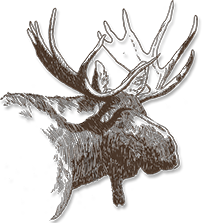
Alaskan Bull Moose captured by D5 / 180-400VR

Fall is when mammals, especially big game look their best with their winter coats. Those coats change slightly each year based on the quality of the browse and the temps. This year with the heat waves and extreme drought, much of the west isn’t offering the same quality habitat as in a typical year. Just watching the White-tailed and Mule Deers on The Ranch, I can see a measurable difference in their pelts. So if planning on chasing the big boys, do some homework for the region you’re heading to. I will make a difference in your final photograph. Fall mammals, plan carefully!

Maybe Later?

Billy Mountain Goat captured by D4s / 80-400VR

It’s late summer and school for many’s kids begins shortly. All you gotta do is head to a National Park and you know lots and lots and lots of folks are on their summer vacation. For many photographers, this is their opportunity to get that shot, try that new lens or experience their thrill of critter photography for months. Perhaps you planned for the last six months to get to Logan Pass, Glacier Nat’l Park. You’ve seen killer photos of their Mountain Goats and you want one of your own. You got to Glacier, you even got through the reservation system so you can drive the Going to the Sun Road. You’re excited as there is no wildfire smoke, you even have a slight cloud cover nicely diffusing the light. You get to Logan Pass and even find a parking spot. Success!

You get out with your favorite lens (it doesn’t take much length) and you walk towards the large gathering of folks. You come up to them to see the Mountain Goats! But you take a second look cause the photos you saw from Logan Pass are not what you’re seeing in front of you. Most don’t realize the summer is not the best time to photograph big game or bears, or anything that grows a winter coat. That’s because they molt that thick coat off so they can grow a new one for winter while staying cool during the summer. I refer to them as “moth-eaten” but that’s not the cause of the ugly coat. And without that winter coat, well, they just don’t look the same. So if you’re summer plans include photography big game, maybe later?

“Come with long lense”

Great Horned Owl captured by D6 / 800f5.6

Sharon was out with Maggie when I received the text, “Come with long lense.” When Sharon has a typo, it’s big! Not the first time I’ve received such a text on The Ranch. When Sharon who knows her birds, knows the lens I would select texts me with something like this, I go running. Me being me, I’d not set the D6 / 800mm up on the tripod that I normally leave up since our last Adventure so it took me a couple of moments to get out. When I went out, I found Sharon & Maggie, and seeing Sharon, I knew exactly where to look. We’d heard the Great Horned Owl since day one on The Ranch but this is the first time we clearly saw her. That’s what the text was all about. I slowly walked up to Sharon and then slowly, over time approached the owl.

We had over thirty minutes with her as she seemed to be just moving through (though I was hoping it would be her morning roost). She permitted me to get within 40-50′ of her. At that point, a squirrel or something caught her attention and she moved to another perch and then went on the hunt. It was a great encounter and just goes to show, venturing past your door, there are photographs to be made! This evening during our thunderstorm, she was back just off from our OP staring over the “Back Nine” looking for sure a bite to eat. I hope she’s here for a long time to come!

Whoooooo Knew?

No Pygmy Owl fledgling captured by D6 / 180-400VR

Sharon and I first went to Madera Canyon back in 1982 to see the amazing hummingbirds that come to this summer Shangri-la. All the regular North American species make an appearance along with some of the finest from south of the border. It is a birder’s paradise that many don’t know even exists. There are many other unique, special, and rare species of birds that come to the canyon in the summer as well like the Elegant Trogan. And as long as I have been journeying there, the smallest owl in North America, the Elf Owl has nested in a telephone pole at Santa Rita Lodge. Over the years we’ve also had Whiskered, Western Screech, Spotted, and Flammulated Owl in the canon. At night, you hear them seemingly everywhere. But this year, there was a first for us, a Northern Pygmy Owl!

No Pygmy Owl fledgling captured by D6 / 180-400VR

One of my friends shooting there ran into another photographer who was watching and photographing the Pygmy Owl (owl is smaller than a dollar bill) nest. He was doing everything right which was so nice to see. Anyways, our friend Pat come back and reported what he learned. It was cool to hear about but since the other photographer was there first and had been working the nest for weeks, I just put it in the back of my mind. Days later, Sharon & I went for a walk birding and ended up down in the area where the photographer had been shooting. We had no idea where the nest was located so kept on birding. After a short time, I saw a small puffball trying to fly and land on a large branch. I knew instantly who it was (we use to rehab owls and had a Pygmy for months). Baby owls are first hatchlings then nestlings then branchlings and finally fledglings. We later learned that two of the three chicks became fledglings that morning. For the next five hours, we watched and photographed the two as they mostly slept on various branches and did silly baby owl stuff. Shortly before dark the parents came in with a freakin large lizard and fed the two chicks. It was a great afternoon and I was pleased to not only learn something new about the owls of Madera Canyon, but photograph them too. Whoooo knew?

Moose Peterson's

Aviation Seminar

Presented Live in the Classroom or Your Computer Simultaneously!

I'm bringing to you all I have learned romancing the skies with those gorgeous flying machines. We're talking hours of live presentations with images, charts, gear, and live demonstrations that you can take to the airfield and use to bring back those great images. To learn more and to get your Boarding Pass, simply click on this banner and then put up your trays and fasten your seatbelts, we're taking off!

Watch and rewatch it for 6 months afterwards!

Masters of the Skies!

Bald Eagle captured Z 6II / Z70-200f2.8 w/Z1.4x

I think of Bald Eagles in two ways, that comes from all my experiences with them. Back in the day in Homer on a -10 February morning, or up on the Haines River in early winter, you see the Bald Eagle in what we affectionately called, “snow pigeon” mode. This is when despite there being tons of food about, they only want the food that’s in the talons of their neighbors and go to great lengths to take it from their clutches. The other mode and the one I enjoy so much, is when they are masters of the skies!

Bald Eagle captured Z 6II / Z70-200f2.8 w/Z1.4x

I had the rare opportunity a few weeks back to spend an hour or so with some that were actively fishing. This pair put on one helluva a show as they would come in, bank and do a 180 so they could use the wind to stall their flight providing for flap maneuverability and then at the last moment, lower them talons and grab the fish (or attempt to) to then tuck it up under their tail and go. To say they smoked me more than once as I was panning is an understatement. I would lose them because they had done an about-face in midflight, me panning one direction and them flying off in another. There were a couple of times though that the wind, light, and flight direction lined up and I could follow them down the water’s surface and watch the intensity in their glorious flight. And it seemed as quickly as we started shooting them, they were gone and the action was over. It was just a thrill though if for only a moment to be amongst them and watch them at their best being master of the sky!

error: Content is protected !!